Health and wellbeing indicators for New Zealanders with intellectual disability
Download the report: From Data to Dignity: Health and Wellbeing Indicators for New Zealanders with Intellectual Disability (PDF)
Easy Read – New Zealand's Integrated Data Infrastructure (PDF)
IHC’s latest research report From Data to Dignity 2026: Health and Wellbeing Indicators for New Zealanders with Intellectual Disability updates our groundbreaking 2023 work.
The report, produced with research organisation Kōtātā Insight, uses the Government’s Integrated Data Infrastructure (IDI) to track more than 70 indicators across health, education, housing, justice and income. The first From Data to Dignity report in 2023 was the first to systematically use government data to examine outcomes for people with intellectual disability.
The latest data shows inequities remain entrenched – and in some cases are worsening. Some of the insights include:
IHC is calling on the Government to deliver:
The Visual Insights app below can be used to visualise the data by geographic location and various demographics.
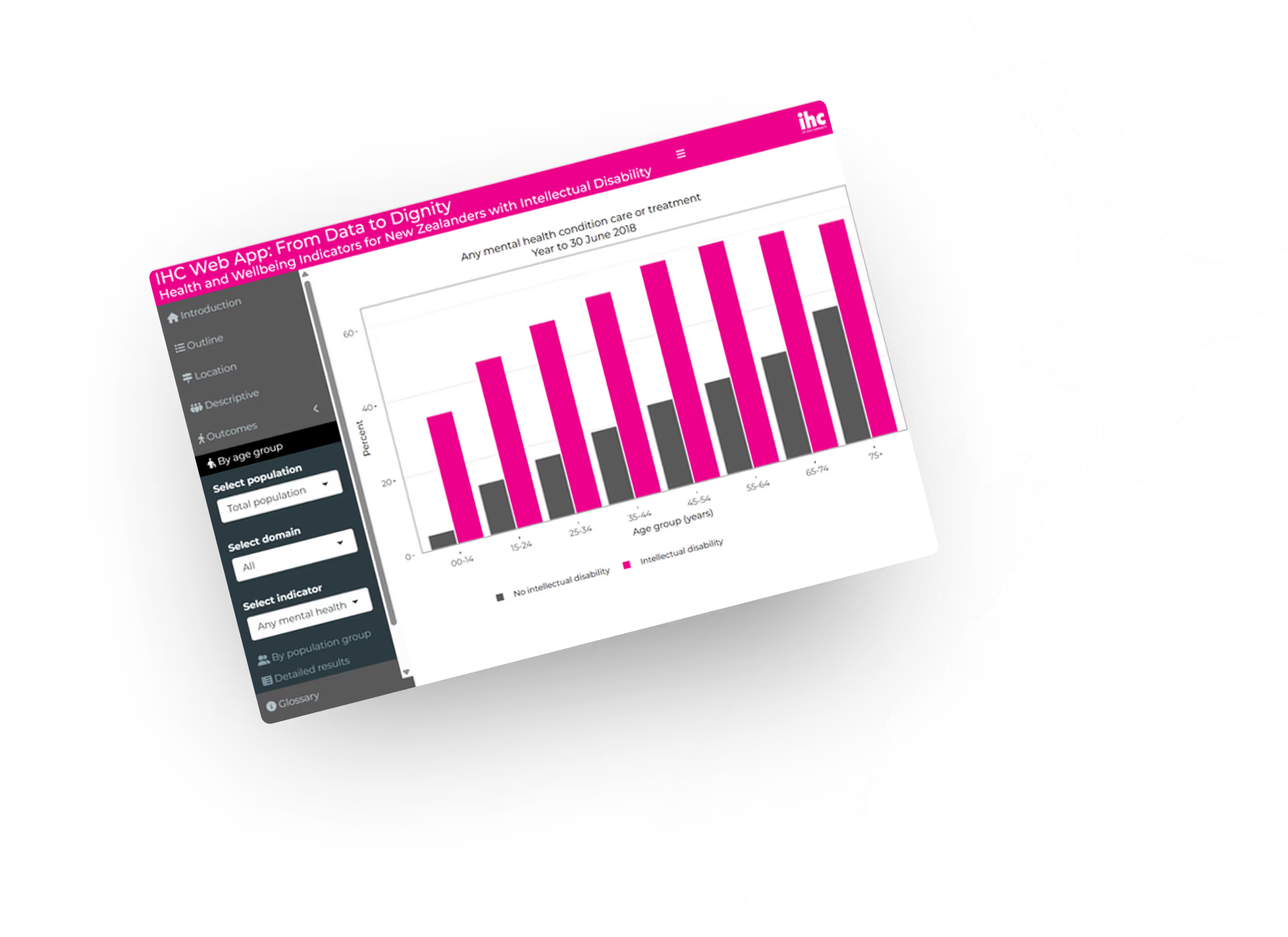
This app shows information about what life is like for people with intellectual disabilities in New Zealand. It compares people with and without intellectual disabilities.
It uses data from the Integrated Data Infrastructure (IDI), a secure system run by Stats NZ. The IDI brings together information from different government services and national surveys.
IHC research From Data to Dignity: Health and Wellbeing Indicators for New Zealanders with Intellectual Disability, reveals people with intellectual disabilities are experiencing poor outcomes in most areas of life.
This research is a world first, providing comprehensive quantitative data about people with intellectual disability across many different areas. It now spans two reports: the first published in 2023 and the second update in February 2026.
With this data, we have an opportunity to advocate for better life outcomes in housing, education, health, crime, connectivity, employment and general wellbeing, to name a few.
IHC teamed up with Kōtātā researchers Luisa Beltran-Castillon and Keith McLeod who extracted data about the outcomes of people with intellectual disability from the Integrated Data Infrastructure (IDI) – one of the more comprehensive linked datasets in the world. The IDI holds de-identified data on nine million individuals in New Zealand, dating back to 1840, collected from government agencies, surveys, and non-governmental organisations over many years.
From the IDI data, we identified approximately 47,000 people with intellectual disabilities, noting a higher prevalence of intellectual disability among Māori. The data shows significant disparities in healthcare, with intellectually disabled people being treated at much higher rates for most major mental and physical health conditions.
Additionally, we found intellectually disabled people experience significant socioeconomic challenges, including lower educational attainment, limited employment opportunities, and a persistent income gap, especially in older age groups.
The IDI report sheds light on the living conditions and experiences of intellectually disabled people, revealing issues such as limited internet access, infrequent travel overseas, and frequent residential moves.
Intellectually disabled children were found to face housing challenges, higher rates of parental separation, and increased vulnerability to crime and domestic violence.
The report highlighted the overrepresentation of intellectually disabled people in the justice system, with higher rates of criminal convictions and incarceration compared to the general population.
The reports enhance our understanding of the lives that intellectually disabled people lead and is as a valuable resource for policymakers, healthcare professionals, advocates, and researchers striving to promote inclusivity, equity, and improved quality of life for intellectually disabled individuals worldwide.
Unfortunately, it reveals what little progress has been made on targeting or improving any of the outcomes experienced by people with intellectual disability.

New research delivers a stark reality check on the health and wellbeing of New Zealanders with intellectual disability.
The New Zealand Health Survey 2024/25 shows that most people consider themselves in good health, while people with intellectual disability experience some of the poorest health outcomes in the country.
The Government’s decision to means test the families of 18- and 19-year-olds before they qualify for Jobseeker support will unfairly punish young people with intellectual disability and families already struggling to make ends meet.
The latest Ministry of Social Development social cohesion report confirms what disability advocates have long warned: poverty is deepening across Aotearoa, and disabled people are hit hardest.
IHC New Zealand says specific, targeted health policies are necessary to bridge the life expectancy gap between people with intellectual disability and the rest of New Zealand.
The IHC report, From Data to Dignity, shows only 69% of people with intellectual disabilities have access to the internet.
IHC New Zealand wants to see more employers cut through the red tape when hiring people, particularly those with an intellectual disability.
Once again, the one in four New Zealanders with a disability are not a priority for this Government, says IHC New Zealand.
IHC New Zealand is asking Whaikaha to clarify changes to disabled people’s funding and what it means moving forward.
IHC New Zealand is dismayed that a new Government report, billed as a “nationwide picture of the population’s health,” ignores the 47,000 people with intellectual disability in New Zealand.
IHC New Zealand says the Government’s introduction of juvenile boot camps for youth offenders will unfairly target young people with intellectual disability.
IHC New Zealand echoes the Chief Ombudsman’s call for the Government to make changes to Oranga Tamaraki so that our most vulnerable children are protected.
IHC Director of Advocacy, Tania Thomas, says the Government is making decisions about benefits on the fly and not on evidence, which is putting intellectually disabled New Zealanders at serious risk.
New Zealanders have long life expectancies, but new research from IHC shows that intellectually disabled New Zealanders die up to 20 years earlier than the rest of the population.

IHC National Office
Level 15, 57 Willis Street
Wellington
9am to 5pm
Monday to Friday


