Our aim is to improve outcomes for people with intellectual disabilities in:
We work hard to persuade government, decision-makers and other organisations to change their laws, policies, practices and beliefs so that the rights of people with intellectual disabilities are upheld.
We work to solve issues that affect a large group of people. This is Systemic Advocacy. The sorts of issues this advocacy addresses are often a problem with a system, meaning a lot of people are experiencing the same problem.
Our vision is that New Zealand is a place where people with intellectual disabilities are valued citizens and part of their community.
We work alongside people with lived experience and their families and whānau, disability service providers and communities across the country.
Our work is grounded in the UN Convention on the Rights of Persons with Disabilities (CRPD), the Code of Health and Disability Services Consumers’ Rights, and the Disability Action Plan.
IHC undertakes different campaigns that focus on key issues facing people with intellectual disability.
Some of our previous campaigns have been focussed on elections, education, safeguarding citizenship and rights, supported decision-making and quality of life monitoring.
Call IHC Advocacy toll free on 0800 442 442 or email advocacy@ihc.org.nz

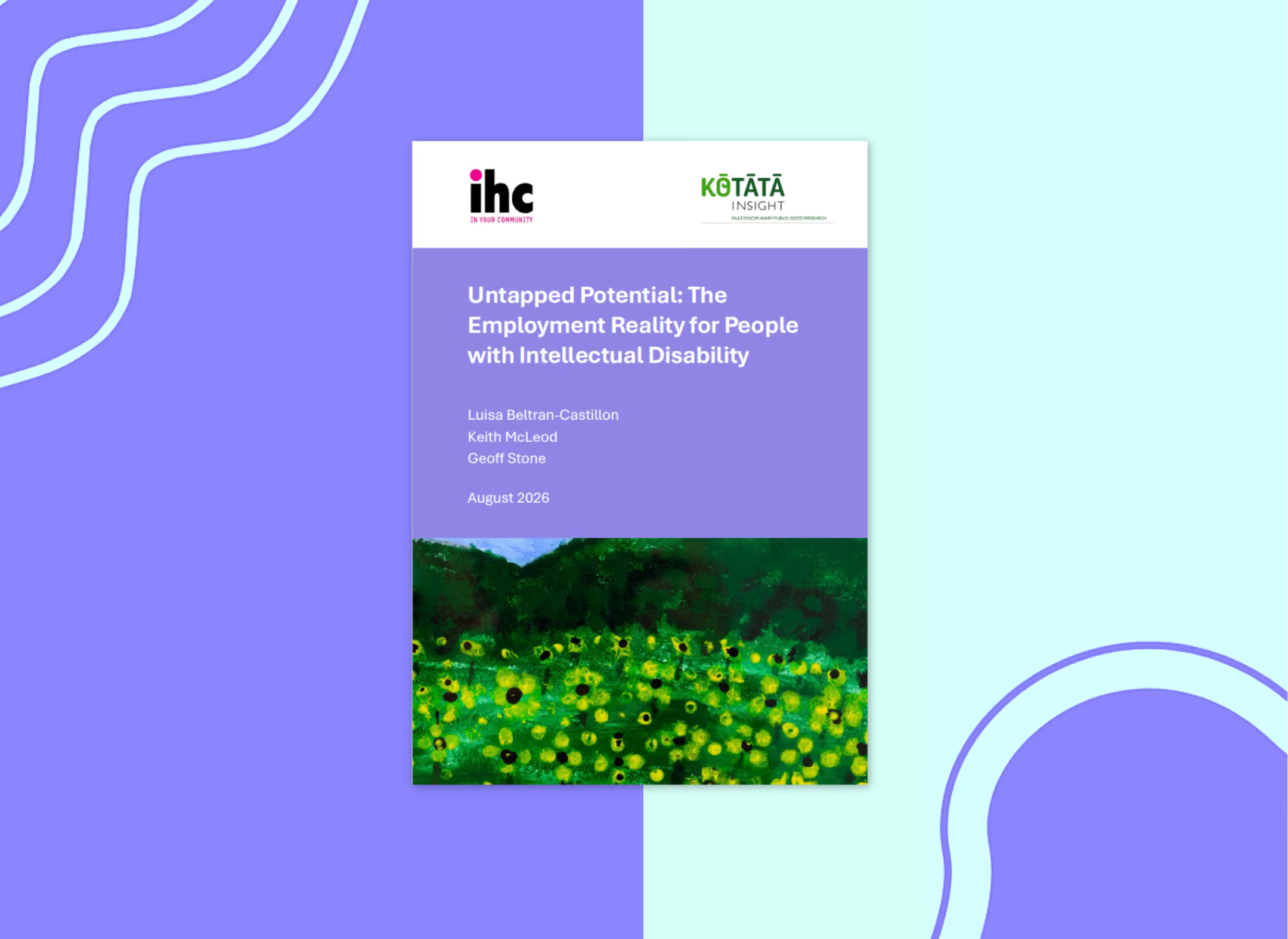
Untapped Potential: The Employment Reality for People with Intellectual Disability combines national employment, tax, and survey data with the lived experiences of people with intellectual disabilities and their families. While the report reveals a stark picture of employment discrimination and income inequity, it also provides practical solutions to help thousands more people into meaningful work.
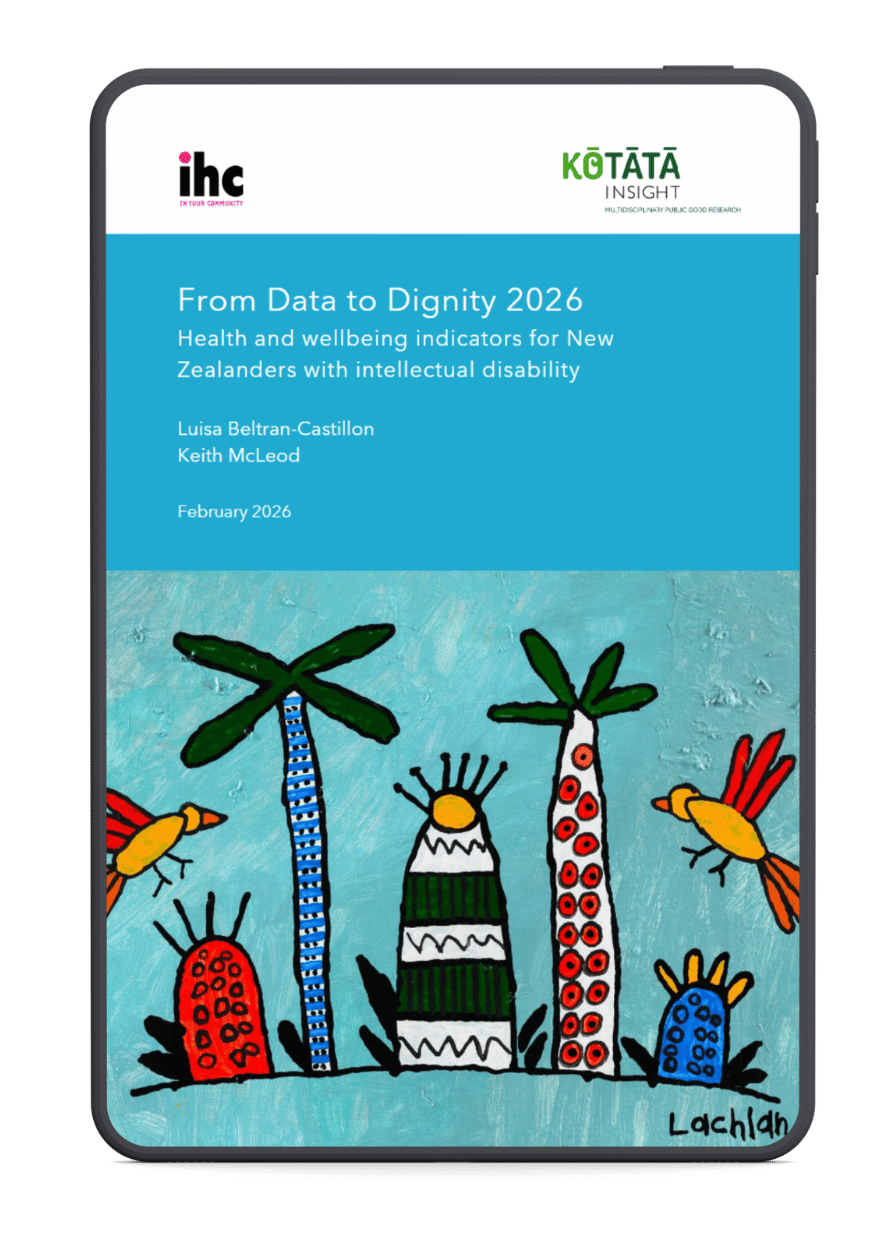
IHC’s latest research report From Data to Dignity 2026: Health and Wellbeing Indicators for New Zealanders with Intellectual Disability updates our groundbreaking 2023 work.
The report, produced with research organisation Kōtātā Insight, uses the Government’s Integrated Data Infrastructure (IDI) to track more than 70 indicators across health, education, housing, justice and income. The first From Data to Dignity report in 2023 was the first to systematically use government data to examine outcomes for people with intellectual disability.
In November 2025 IHC signed a landmark settlement with the Government that acknowledges the education system does not work for many disabled learners and starts a long-term programme to fix it. The settlement is the starting point for change following decades of advocacy.

IHC’s report, The Cost of Exclusion: Hardship and People with Intellectual Disability in New Zealand lays bare the depth of poverty experienced by people with intellectual disabilities.
The report shows people with an intellectual disability are twice as likely to live in hardship or severe hardship. They face significantly higher rates of hardship at every stage of life. Severe hardship rates triple in middle age, even as they decline for the rest of the population.
Living with disability comes at a real cost, one that’s falling on individuals and families who are often excluded from work, transport and even food.

IHC has told Parliament that the Disability Support Services Bill should not proceed in its current form. While supporting a legal framework for disability support services, IHC says the Bill needs stronger protections for disabled people’s rights, greater accountability, and more meaningful consultation.
We urge the government to ensure that any changes to Total Mobility are consistent with the UNCRPD.
IHC fully supports the findings of The Economic Contribution and Sacrifices of Unpaid Family, Whānau and Aiga Carers in New Zealand and has recommendations for the Carers’ Strategy Action Plan.
IHC is calling for the proposed Accessibility Standards Bill to explicitly include people with intellectual disability after identifying a significant gap in its definition of disability.
IHC welcomes the Government’s move to clarify the role of Disability Support Services (DSS), which will provide certainty for families and disabled people. However, any reform must also recognise the enormous financial and emotional burden carried by families supporting intellectually disabled family members.
Whaikaha – Ministry of Disabled People’s newly released analysis highlights the systemic financial hardship many disabled people face and reinforces what has been known for years: poverty among disabled people in Aotearoa New Zealand is persistent, predictable, and preventable.







IHC National Office
Level 15, 57 Willis Street
Wellington
9am to 5pm
Monday to Friday


