Categories


From Data to Dignity 2026

Sasanka Mendis works as a library assistant in Auckland and lives with learning and intellectual challenges, autism spectrum disorder and ADHD. He says his favourite part of the job is being surrounded by books and people and encouraging kids’ love of reading. Some days are challenging, but “as long as I’ve got a purpose and I’m working towards something, I’ll get there”, he says.
Sasanka, 33, has three diplomas, including in IT HelpDesk and animation. Yet finding a job took years. He applied for more than 200 jobs and received just 5 responses. Yet he is one of the success stories.
Only 21 percent of adults with intellectual disability are in paid employment, compared with 78 percent of the general population. That is just one of the many findings of IHC’s latest report From Data to Dignity 2026: health and wellbeing indicators for New Zealanders with intellectual disability.
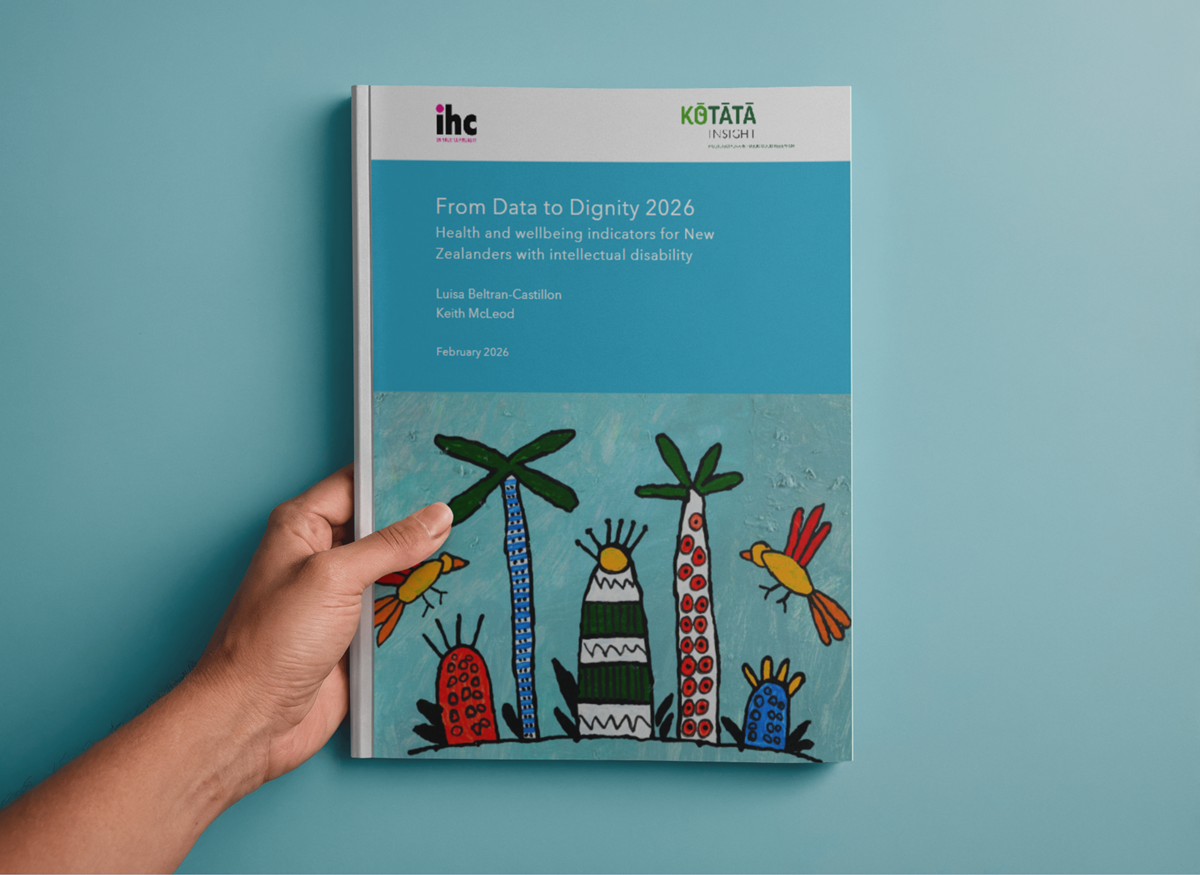
The report, produced with research organisation Kōtātā Insight, uses the government’s Integrated Data Infrastructure (IDI) to track more than 70 indicators across health, education, housing, justice and income. It builds on IHC’s groundbreaking 2023 From Data to Dignity study, which was the first to use government data systematically to examine outcomes for people with intellectual disability.
The 2026 update delivers what IHC Director of Advocacy Tania Thomas calls “a reality check.”
“The numbers are distressing, but sadly not new,” she says. “IHC continues to provide government with evidence that shows they need to do better.”
The data shows inequities remain entrenched – and in some cases are worsening. Some of the insights include:
- People with intellectual disability live on average 17 years less than the general population
- High emergency department use and injury-related hospitalisations, particularly among women with intellectual disability
- Evidence of barriers to ACC access, with lower claim rates despite higher injury prevalence
- A concerning rise in young people leaving school without qualifications
- Greater exposure to housing pressure with rising placement on social housing waiting lists, particularly for Māori and Pacific children with intellectual disability.
Taken together, the figures paint a picture of systemic disadvantage.
“This update is a reality check,” says Tania. “The Government’s Disability Strategy can be enhanced by including urgent action to address these persistent inequities.”
IHC is calling on the Government to deliver regular public reporting on outcomes, targeted action to address inequities for Māori and Pacific communities, and improved disability-aware health services.
Tania says the new report will form the basis of ongoing advocacy to create systemic change for people with intellectual disability. IHC members and supporters will be invited to help those advocacy efforts by networking and amplifying the calls for policy change.
For families like Sasanka’s, these statistics are not abstract. They represent years of persistence, barriers and resilience.
Behind every indicator in the research is a person with strengths, ambitions and rights.
You can find the report at: www.ihc.org.nz/fromd2d
Image 1: Sasanka Mendis.
Image 2: From Data to Dignity 2026: health and wellbeing indicators for New Zealanders with intellectual disability

This story was published in Strong Voices. The magazine is posted free to all IHC members.
Download PDF of Strong Voices issue